

Global Flexible Magnet Market: Strategic Overview and Geographic Market Share Analysis (2025–2034)
The industrial and commercial landscapes are witnessing a significant shift toward versatile, lightweight, and customizable materials. At the forefront of this evolution is the Flexible Magnet Market, which provides essential solutions for sectors ranging from automotive engineering to retail visual merchandising. Composed of a polymer matrix impregnated with magnetic powders—primarily ferrite or neodymium—flexible magnets offer the unique advantage of being bent, coiled, and die-cut into intricate shapes without compromising their magnetic properties.
Strategic market evaluation indicates that the demand for these materials is being propelled by the need for cost-effective fastening, sealing, and labeling solutions. The global Flexible Magnet market size is expected to reach US$ 632.43 Million by 2034 from US$ 389.20 Million in 2025. The market is anticipated to register a CAGR of 5.54% during the forecast period 2026–2034. This consistent growth reflects a global industrial trend toward modularity and the replacement of rigid, heavy components with flexible alternatives.
Download Exclusive Sample PDF of the Flexible Magnet Market Study - https://www.theinsightpartners.....com/sample/TIPRE000
Market Overview: The Pliability Revolution
Flexible magnets have carved out a significant niche in the global magnetics industry due to their physical durability and impact resistance. Unlike ceramic or rare-earth magnets, which are brittle and prone to cracking, flexible magnets can withstand mechanical stress and environmental fluctuations. They are produced through either extrusion (for strips and profiles) or calendering (for wide sheets).
The market analysis reveals that while ferrite-based flexible magnets dominate the volume share due to their affordability, the rare-earth (neodymium) flexible magnet segment is witnessing the fastest growth in value. This is driven by high-tech applications requiring extreme magnetic density in a pliable form, such as advanced sensors and compact electronic actuators.
Market Share Analysis by Geography
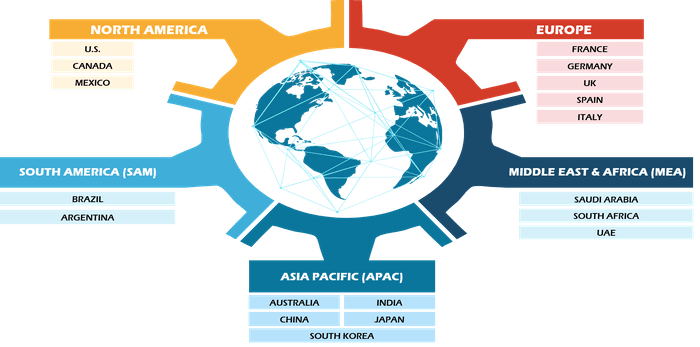
The demand for flexible magnets is distributed across various regions, each driven by distinct industrial strengths and consumer behaviors. A geographic breakdown reveals the strategic focus areas for global manufacturers through 2034.
1. Asia-Pacific: The Manufacturing Powerhouse
Asia-Pacific currently holds the largest share of the global flexible magnet market. This dominance is primarily attributed to the region's massive manufacturing hubs in China, Japan, and South Korea.
• Electronics Hub: As a global center for consumer electronics production, the demand for flexible magnets in smartphone closures and tablet covers is exceptionally high.
• Automotive Growth: The rapid expansion of Electric Vehicle (EV) production in China necessitates lightweight magnetic sensors and gaskets, further solidifying the region's market lead.
• Industrial Infrastructure: Increasing investments in cold chain logistics across India and Southeast Asia are driving the demand for refrigeration gaskets.
2. North America: Innovation and Technical Premiumization
North America accounts for a significant portion of the market value, characterized by a high demand for advanced anisotropic flexible magnets.
• Aerospace & Defense: The region leads in the adoption of high-energy neodymium flexible magnets for specialized aerospace applications.
• Retail & Advertising: A mature organized retail sector drives a steady volume for magnetic signage and point-of-purchase (POP) displays.
• R&D Investment: Significant focus on "Smart Magnetics" and IoT-integrated seals is prevalent among North American players.
3. Europe: Driven by Energy Efficiency and Sustainability
The European market is highly influenced by stringent regulatory frameworks regarding energy consumption and material recyclability.
• Appliance Efficiency: Regulations on commercial refrigeration energy loss make high-performance magnetic gaskets a mandatory requirement.
• Environmental Mandates: A strong push toward the circular economy is driving innovation in recyclable polymer binders and ferrite powder recovery processes.
• Automotive Precision: Germany and Italy remain key consumers of precision-extruded magnetic profiles for premium automotive interiors.
4. LAMEA: Emerging Opportunities
The Latin America, Middle East, and Africa (LAMEA) region represents an emerging frontier. Growth here is tied to the expansion of urbanization and the development of the retail and food-service industries, which increase the demand for basic magnetic strips and promotional media.