

Engage Logo
    • Advanced Search
  • Guest
    • Login
    • Register
    • Night mode
Innermastery Hub Cover Image
User Image
Drag to reposition cover
Innermastery Hub Profile Picture
Innermastery Hub
  • Timeline
  • Groups
  • Likes
  • Friends
  • Photos
  • Videos
Innermastery Hub profile picture
Innermastery Hub
2 yrs - Translate

9 Principals of Social Intelligence That Everyone Can Master
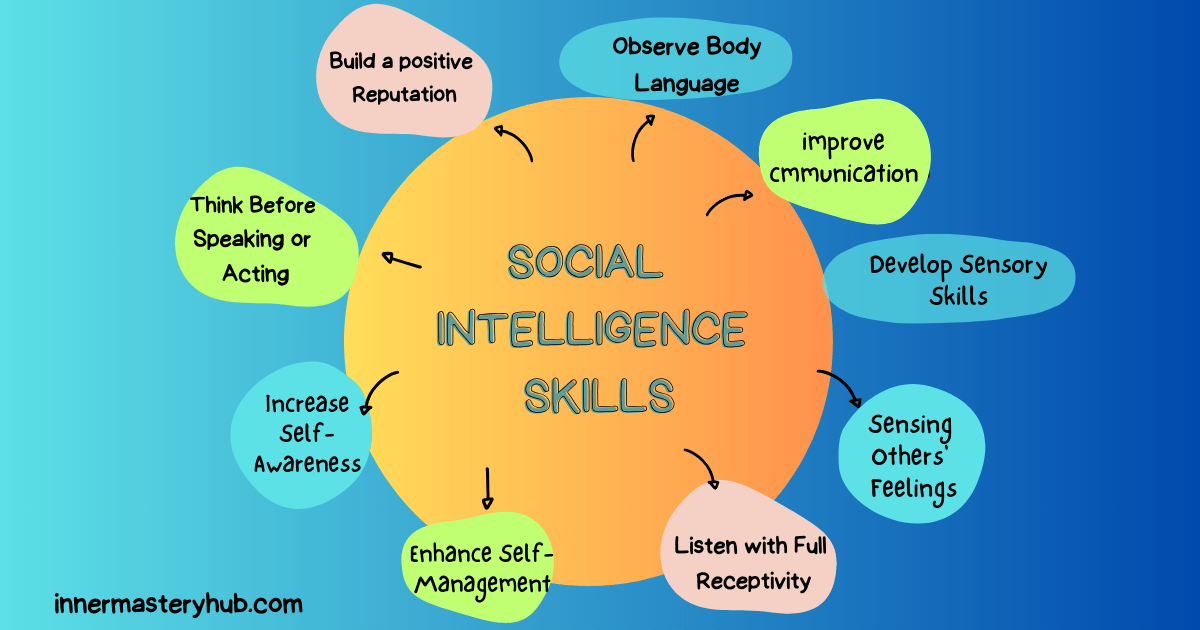
In an ever-evolving digital world, understanding human interactions in society is essential. This is where Social Intelligence comes into play, a skill often overlooked yet vital in today’s connected world. Social Intelligence is the capacity to navigate and negotiate complex social relationships and environments effectively. It’s not just about being friendly or pleasant, but about understanding and adapting to the nuances of social interactions. This blog will delve deeper into the concept of Social Intelligence, its importance, and how you can enhance this essential skill.
Social Intelligence in Psychology?
In psychology, Social Intelligence is a critical subset of human intelligence centered around two core components: social awareness and social facility.

Social cognition refers to the capacity to understand and empathize with others’ emotions and perspectives, while social facility pertains to the ability to behave effectively in social situations.

Social Intelligence Theory: The Research
This section provides an overview of selected key research findings on Social Intelligence Theory. Dr. Karl Albrecht [1], one of the leading researchers on Social Intelligence, suggests that it encompasses five key dimensions: situational awareness, presence, authenticity, clarity, and empathy. These dimensions are integral for successful interpersonal communication and relationship building.

Dr. John Mayer, renowned for his emotional and personal intelligence work, has also undertaken significant research on Social Intelligence. His studies underscore recognizing, understanding, and manipulating social cues to navigate social environments effectively.


Dr. Nicholas Epley of the University of Chicago has conducted extensive research in this field. His work highlights the human tendency to anthropomorphize and how it can impact our social interactions.

By studying and understanding these research findings, we can develop a more comprehensive view of Social Intelligence and its role in our daily lives.

Social Intelligence: A Character Strength
Social intelligence involves understanding and interacting effectively with others and is a vital moral component. Here are a few principles of morality that can enhance sociability:

Respect for Autonomy: Recognizing and honoring the independence of others, allowing them to express their thoughts and make their own decisions.
Beneficence: Acting with kindness and goodwill towards others, putting their needs before your own when necessary.
Nonmaleficence: Avoiding actions that can harm others, either physically or emotionally.
Justice: Treating everyone fairly, regardless of their background or circumstances. This involves acting without bias and prejudice.
Fidelity: Being honest and trustworthy in all interactions, keeping promises and commitments.
Confidentiality: Respecting the privacy of others, keeping shared information confidential unless otherwise agreed upon, or in circumstances where disclosure is necessary for their wellbeing.
Veracity: Demonstrating truthfulness, honesty, and integrity in all communications and actions.
RELATED: Logic and the Study of Arguments: Critical Thinking Skills

Knowledge and understanding of social etiquette
Understanding and practicing social etiquette is crucial for Social Intelligence. It refers to conventional rules for behavior in social situations, which vary depending on culture, society, or setting. These rules encompass greetings, table manners, personal space, and language use. Good social etiquette shows respect, avoids misunderstandings, and facilitates smoother interactions. Adapting to different etiquette in diverse cultures is essential for effective relationships.

Social Neuroscience
Social neuroscience is an interdisciplinary field on understanding how biological systems implement social processes and behavior. Blending the principles of neuroscience, psychology, and cognitive science offers insights into how the human brain functions in social situations. This field of study plays a crucial role in shaping our understanding of social intelligence as it explores the neural mechanisms that underlie social behavior.

Through neuroimaging techniques, researchers can examine how various brain regions are activated during social interactions, providing a physiological perspective on sociability. As we continue to delve into the mysteries of the brain, the findings from social neuroscience are proving increasingly invaluable in our quest to understand and enhance sociability.


READ MORE: https://innermasteryhub.com/9-....principals-of-social
9 Principals Of Social Intelligence That Everyone Can Master
innermasteryhub.com

9 Principals Of Social Intelligence That Everyone Can Master

Dive into this enlightening blog post that demystifies the nine core principles of Social Intelligence. Perfect for students, leaders, or anyone keen on refining their social skills, the blog provides practical steps to enhance your ability to unders
Like
Comment
Share
Innermastery Hub profile picture
Innermastery Hub
2 yrs - Translate

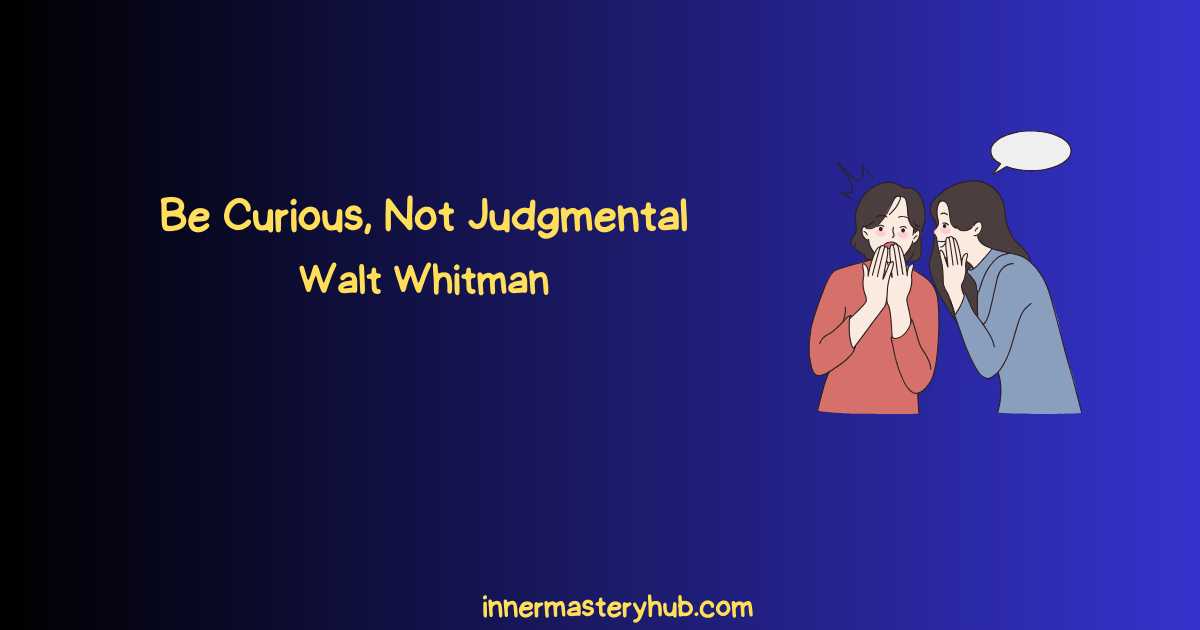
Be Curious, Not Judgmental: The Key to a Fuller Life
In our journey through life, it is so easy to fall into the pattern of making snap judgments about people, situations, and experiences. Our minds often have preconceived ideas and perceptions that restrict us from truly understanding the world around us. This blog will explore the compelling concept of being “curious, not judgmental,” an inspirational quote.

As Ted Lasso says, ” Be curious not judgemental.” This statement perfectly captures his approach, teaching us that curiosity and empathy can foster better relationships and create a positive environment.

We’ll delve into why curiosity, rather than judgment, can pave the way for richer experiences, deeper understanding, and meaningful connections. Stick around, and let’s unfold the magic of curiosity together.

What does it mean to be judgemental?
Being judgemental means forming opinions or conclusions about people or situations, sometimes too quickly and based on surface-level traits, biases, or preconceptions. It’s like evaluating things with strict rules distorts our understanding and empathy. When we judge, we put people in boxes, limiting our appreciation for their complexity and uniqueness. It’s essential to avoid being judgmental because it can close us off to new perspectives, growth, and meaningful connections. So, let’s keep an open mind and embrace the richness of diversity!

Characteristics of Judgmental People
Dr. Marcum compares the traits of judgmental persons to those of more open-minded people.

According to Dr. Marcum:

Characteristics of judgmental people:
They make quick assumptions about others based on superficial attributes such as appearance, social status, or behavior.
They categorize people into rigid boxes, failing to appreciate the complexity and uniqueness of individuals.
They resist changing their views even when presented with new information or perspectives.
They often dismiss or downplay information that contradicts their preconceived notions.
Characteristics of open-minded people:
They are curious and willing to engage with differing viewpoints.
Rather than making judgments based on superficial attributes, they take the time to understand different perspectives.
They appreciate individuals’ complexities and unique traits.
They seek out new information and are willing to adjust their beliefs when presented with compelling evidence.
Walt Whitman’s Perspective on Being Non-Judgmental
Walt Whitman quote, a renowned American poet, had a unique perspective on non-judgment. His works embrace all aspects of life with curiosity and acceptance. In his poem “Song of Myself,” he wrote, “I am large, I contain multitudes,” recognizing the diversity within individuals without judgment. Whitman encourages us to approach others with curiosity, empathy, and openness, fostering a compassionate understanding of the world. His writings inspire a non-judgmental attitude and nurture curiosity.

Replacing Judgment with Curiosity
Replacing judgment with curiosity cultivates an open-minded environment and encourages growth and understanding. Here are some ways to make this shift:

Ask Questions Instead of Making Assumptions: When you feel judgmental, pause and ask questions. Try to understand the person or situation more deeply. This process not only fosters empathy but also broadens your perspective.
Practice Active Listening: Active listening involves entirely focusing on the speaker, acknowledging their feelings, and responding thoughtfully. This practice can help you understand their point of view rather than rushing to judgment.
Adopt a Learner’s Mindset: Embrace the unknown and view every interaction as an opportunity to learn something new. This mentality reframes judgment as curiosity and fosters a desire to understand rather than criticize.
Embrace Diversity: Recognize and appreciate the diversity of human experiences and perspectives. This can help you move away from judgment and toward curiosity and understanding.
Characteristics of Curious People
Inquisitive: Curious individuals naturally ask questions and explore unfamiliar territories. They’re always searching for new knowledge and aren’t afraid to delve into subjects they know little about.
Open-minded: Curiosity fosters open-mindedness. Curious people are receptive to new perspectives, ideas, and diverse cultures. They understand that there’s always more to learn and that different viewpoints can broaden their understanding.
Persistent: Curious people are persistent in their quest for knowledge. They are not easily discouraged by challenges or obstacles. Instead, they perceive them as opportunities to learn and grow.

image
Like
Comment
Share
Innermastery Hub profile picture
Innermastery Hub
2 yrs - Translate

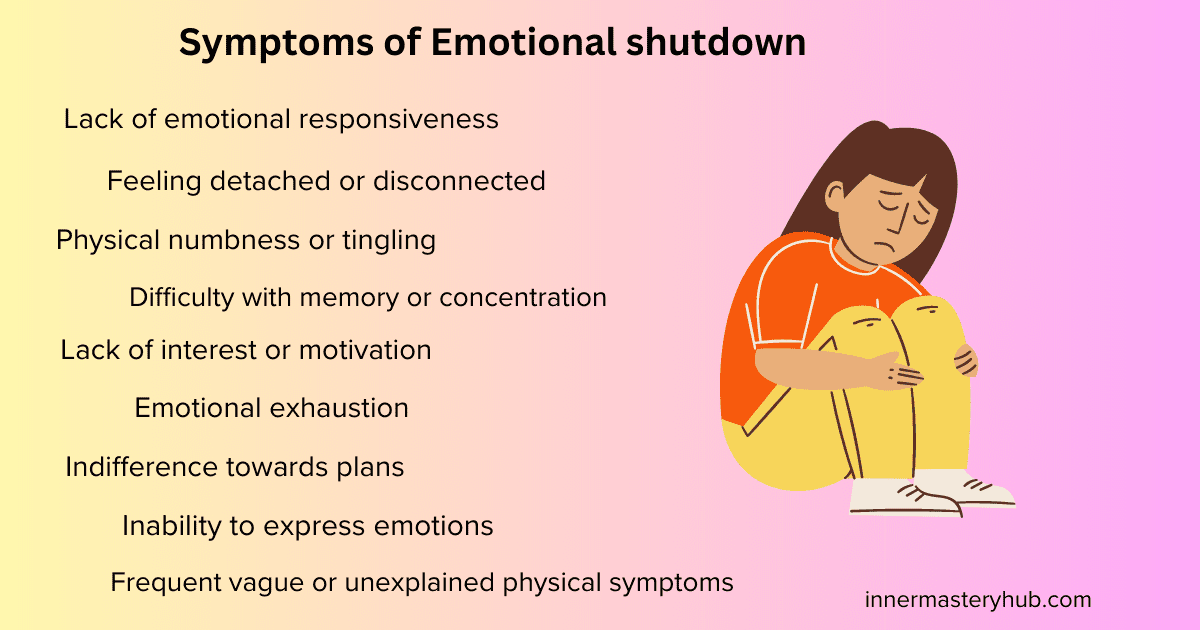
6 Ways To Stop Emotional ShutDown During Arguments
Have you ever had one of those days when your heart wants to curl up and hide? When the world seems too loud, demanding, or overwhelming, you only want to retreat into your shell. If this sounds familiar, you’ve probably experienced what psychologists call an ‘ emotional shut down emotional shutdown.’

Although often misconstrued, this phenomenon is widespread and has significant implications for our mental health and relationships with others. So, let’s dive in and unravel the mystery behind emotional shutdown – what it is, why it happens, and most importantly, how we can better navigate these emotional waters.
READ MORE: https://innermasteryhub.com/ho....w-to-avoid-emotional

6 Ways To Stop Emotional ShutDown During Arguments
innermasteryhub.com

6 Ways To Stop Emotional ShutDown During Arguments

Emotional shutdown often serves as a self-defence mechanism, a way for the mind to protect itself from emotional distress or trauma.
Like
Comment
Share
Innermastery Hub profile picture
Innermastery Hub
2 yrs - Translate

Miscommunication, the ultimate villain in our daily interactions, can cause unnecessary misunderstandings, mess up relationships, and even affect productivity in professional settings. So, how do we defeat this enemy? Well, let’s dive into Communication in this blog post.

We’ll focus our talk on the process and skill of communicating on one specific skill that plays the hero – a tool that, when used right, can seriously eliminate miscommunication. Stick around as we uncover this essential process and skill to Communicate effectively.
https://innermasteryhub.com/co....mmunication-skills-t

Communication Skills To Eliminate Miscommunication
innermasteryhub.com

Communication Skills To Eliminate Miscommunication

5 Tips for Improving Your Communication Skills
Like
Comment
Share
Innermastery Hub profile picture
Innermastery Hub
2 yrs - Translate

Overcoming indecisiveness: 9 Simple Ways to Stop Being so Indecisive and Help You

Indecision has a sneaky way of creeping into our lives. It leaves us feeling stuck and unproductive, whether we feel anxious and overwhelmed pondering career and life paths, trouble making out, contemplating relationships, trouble making out, or even just trying to pick a dish-making out. It’s like, a never-ending cycle of turmoil, self-doubt, and stress.

But guess what? Overcoming indecision is this as it seems. The blog post is here to help you out! We’ll equip you with some practical strategies on how to be less indecisive today, awake tomorrow rather than more indecisive today, and conquer making the indecision so awake tomorrow you can start making decisions confidently and clearly. Ready to dive in? Let’s explore this article helpful this article!

Read more: https://innermasteryhub.com/ov....ercoming-indecisiven

Overcoming Indecisiveness 9 Simple Ways To Stop Indecisiveness 
innermasteryhub.com

Overcoming Indecisiveness 9 Simple Ways To Stop Indecisiveness 

Overcoming Indecision: 9 Simple Ways to Stop Indecisiveness and Help You... 
#mentalhealth #indecision #decisionmaking #selfdevelopment #selfdevelopment
Like
Comment
Share
 Load more posts
    Info
  • 6 posts
  • https://innermasteryhub.com/

  • Female
  • 12/02/97
  • Working at https://innermasteryhub.com/
  • Living in Pakistan
  • Located in Pakistan
About

Professional writer and Blogger

    Albums 
    0
    Friends 
    1
  • Danny Huff
    Likes 
    0
    Groups 
    0

© 2025 Engage

Language
  • English
  • Arabic
  • Dutch
  • French
  • German
  • Italian
  • Portuguese
  • Russian
  • Spanish
  • Turkish

  • About
  • Contact Us
  • Developers
  • More
    • Privacy Policy
    • Terms of Use
    • Request refund

Unfriend

Are you sure you want to unfriend?

Report this User

Important!

Are you sure that you want to remove this member from your family?

You have poked Innermasteryhub

New member was successfully added to your family list!

Crop your avatar

avatar

© 2025 Engage

  • Home
  • About
  • Contact Us
  • Privacy Policy
  • Terms of Use
  • Request refund
  • Developers
Language
  • English
  • Arabic
  • Dutch
  • French
  • German
  • Italian
  • Portuguese
  • Russian
  • Spanish
  • Turkish

© 2025 Engage

  • Home
  • About
  • Contact Us
  • Privacy Policy
  • Terms of Use
  • Request refund
  • Developers
Language
  • English
  • Arabic
  • Dutch
  • French
  • German
  • Italian
  • Portuguese
  • Russian
  • Spanish
  • Turkish

Comment reported successfully.

Post was successfully added to your timeline!

You have reached your limit of 5000 friends!

File size error: The file exceeds allowed the limit (954 MB) and can not be uploaded.

Your video is being processed, We’ll let you know when it's ready to view.

Unable to upload a file: This file type is not supported.

We have detected some adult content on the image you uploaded, therefore we have declined your upload process.

Share post on a group

Share to a page

Share to user

Your post was submitted, we will review your content soon.

To upload images, videos, and audio files, you have to upgrade to pro member. Upgrade To Pro

Edit Offer

0%