
Beğen
Yorum Yap
Paylaş


Proof of Authority (PoA) in Blockchain
In this series covering various consensus mechanisms, today, we’ll reap Proof of Authority (PoA) in blockchain technology. And how does it improvise the proof of stake (PoS) mechanism? We’ll also go through the working of PoA and the significant pros and cons of this algorithm.
In broader ways, blockchain networks divide into 2 categories–Permissionless (Eg. Bitcoin, Ethereum, etc.) and Permissioned (Hyperledger, Ripple, Corda, etc.).
Permissionless blockchain networks allow external parties to mine a new block of transactions to the network without any permission. However, the system follows a consensus algorithm and several protection protocols to ensure the safety of the network. On other hand, Permissioned blockchain networks have pre-authorized and selected participants. Hence, no external party is allowed to participate in the mining process of the network.
What is Proof of Authority (PoA)?
PoA consensus mechanism was tossed by the co-founder of Ethereum, Gavin Wood, in 2017. PoA modifies the traditional proof of stake (PoS) mechanism.
Proof of Authority (PoA) is a reputation-based consensus mechanism that provides high performance and fault tolerance. PoA is an improvisation on the Proof of Stake (PoS) mechanism. In similarity with PoS, PoA also uses the concept of digital signing to verify participant identities. However, PoA asks for network participants’ reputations at stake instead of staking coins.
With the PoA algorithm, each miner (or network participant who wishes to add their new block of transactions) has to prove their reputation and authority on the network. Hence, PoA leverages the value of identities in a private network.
How does the PoA Algorithm work?
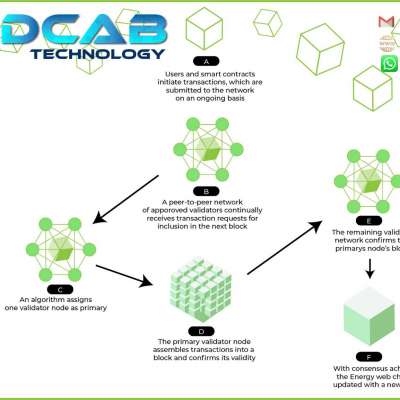
PoA provides the right to generate a new block to those nodes who have proven their authority with reference to their identity in the network. Here, nodes eligible to create a new block are known as Validators.
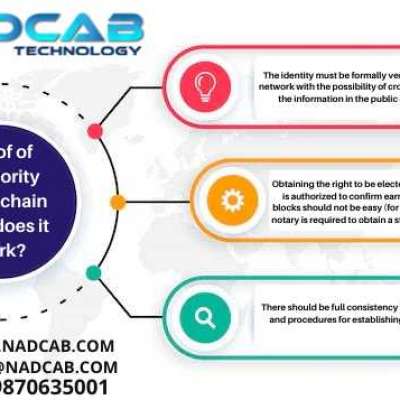
How can a node become a validator in the PoA mechanism?
• Verified, valid, and trustworthy network identity
• No criminal record
• Good moral standards
• Stay committed to the network
• Willing to put reputation at stake
The process of selecting validators requires a lot of verification. Hence, it’s hard to become a validator with PoA consensus.
The validators are the authenticated miners of the network. There are a limited number of block validators which makes the system highly scalable. The blocks of transactions are verified and approved by pre-approved network participants who serve as moderators.
Here, blocks generate in a predictable sequence concerning the number of validators and their reputation in the network.
Benefits of Proof of Authority (PoA)
Following are the advantages of the Proof of Authority algorithm:
• Unlike Proof of Work, PoA doesn’t require high computational power resources.
• PoA consumes less time and energy compared to PoW and PoS.
• It possesses a greater speed of validating transactions. Hence, a higher transaction rate.
• PoA supports a limited number of validators which makes it highly scalable.
• Assured protection against 51% attacks on the network.
• PoA is a great choice of permissioned or private blockchain networks.
Limitations of Proof of Authority (PoA)
Following are the disadvantages of the Proof of Authority algorithm:
• The system is highly dependent on validators. Hence, they need to be picked consciously, not randomly.
• It is not preferred for public networks or permissionless blockchains.
• PoA consensus algorithm is less decentralized in comparison to other algorithms.
• As reward collection in a public network is visible to everyone, it’s easy to predict the balance of an account which makes it less secure.
• PoA is susceptible to corruption and manipulation.
• The mechanism automatically filters out the non-active or non-committed validators, which makes participants less interested in the process.
• It’s also pretty hard to become a validator on a permissioned network.
In Conclusion
Proof of Authority is a consensus mechanism that relies on the validator’s reputation to make the blockchain network work properly. PoA has its applications in supply chain models. As the consensus mechanism favors private blockchains, its reliable for organizations and banks.
Hope you found the article insightful and enjoyed reading it. You can share your reviews and queries in the link below.
Visit Us :- https://bit.ly/38jZuK6


This is the PoA-based Blockchain company that provides PoA-based networks, transactions, and blocks that are validated by approved accounts, known as validators. Run software allowing them to put transactions in blocks.