


Exploring the Timeless Beauty and Craftsmanship of Japanese Woodblock Prints
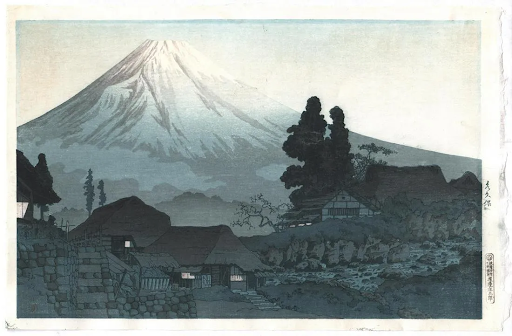
The art of Japanese woodblock prints stretches back to the Edo period (1603-1868), when Japan experienced a boom in cultural expression. Ukiyo-e, which means "pictures of the floating world," was a reflection of the time's urban life, featuring scenes from busy cities, teahouses, geishas, kabuki players, and the natural world.
Japanese woodblock prints, created through a painstaking process, are a monument to the accuracy and ability of the craftspeople involved. Several processes are involved in the process, beginning with the artist's initial concept and continuing with the carving of multiple wooden blocks, one for each hue in the print.
https://auctiondaily.com/news/....the-rise-and-fall-of
The Timeless Allure of Tamara de Lempicka's Artwork
Certain individuals stand out as trailblazers and influential figures in the annals of art history, influencing the direction of artistic expression for future generations. One such notable is Tamara de Lempicka, a name that embodies Art Deco sophistication, audacious sensuality, and a singular vision that has irrevocably altered the landscape of the art world. We'll examine Tamara de Lempicka's art is an life and artistic oeuvre in this piece, as well as the pieces' ongoing appeal.
The Mysterious Tamara de Lempicka:
Born in Warsaw, Poland in 1898 as Maria Górska, Tamara de Lempicka art had a life that was as bit as fascinating as her artwork. She adopted a bohemian lifestyle at an early age, defying expectations and laying the groundwork for her provocative and avant-garde artworks. She refined her talents and developed her distinct style while studying painting in Paris and St. Petersburg. She really came into her own as an artist during the Roaring Twenties in Paris, when her flapper-esque manner and audacious viewpoint captured the essence of the time.
https://auctiondaily.com/news/....tamara-de-lempickas-